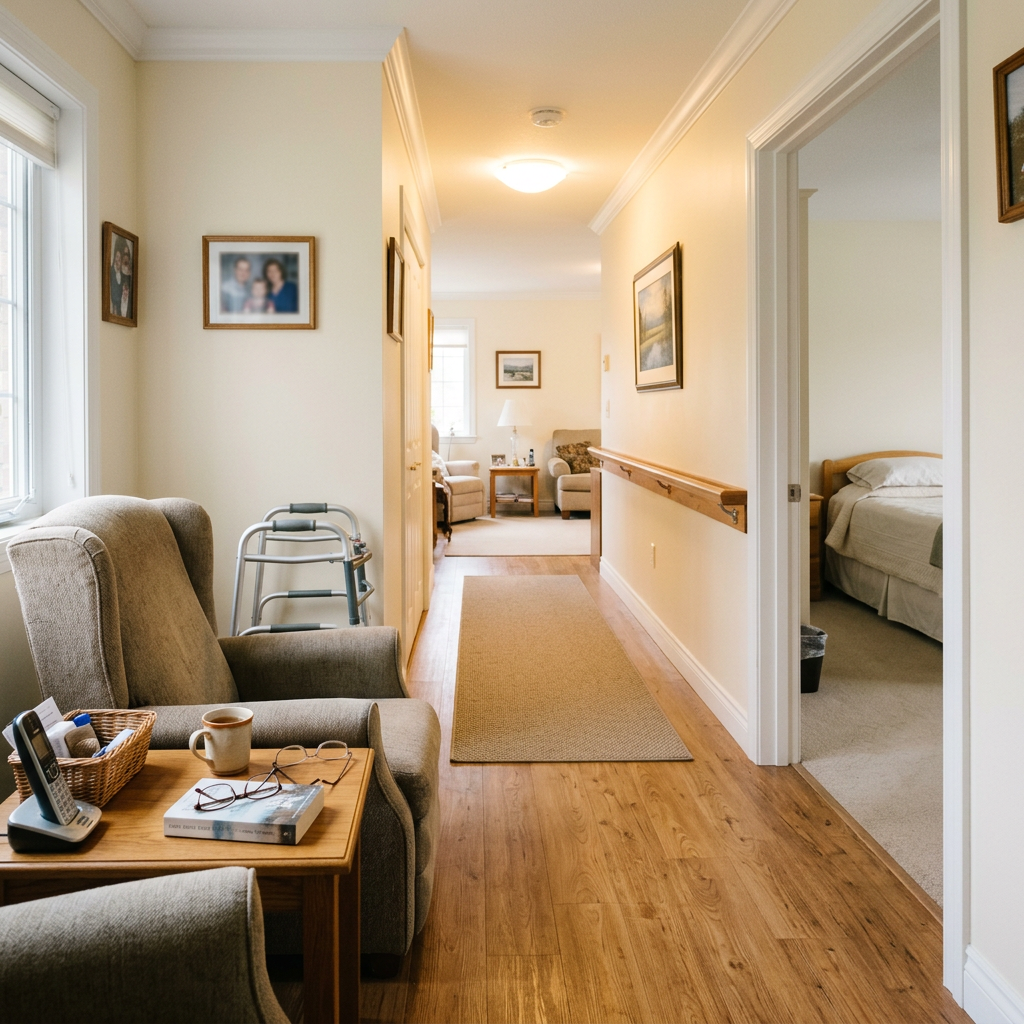
For many older people, staying at home means keeping their routine, privacy and independence. For their families, however, it can bring worries.
Are they eating properly? Are they safe at home? Are they remembering their medication? Are they becoming lonely? And how can you help without taking over or spending more than necessary?
The good news is that small, inexpensive changes can make everyday life safer and easier. The best place to start is often with what you already have.
Everyday Difficulties
Instead of focusing on what your relative can no longer do, ask: What is making everyday life harder than it needs to be?
Maybe everyday items are stored too high, getting dressed has become tiring, or carrying laundry downstairs is difficult. Move frequently used items within easy reach. Keep clothes accessible. Place a sturdy chair in the bedroom if sitting makes dressing easier. Clear the routes they use most often.
Before buying equipment, look at what can simply be moved, removed or reorganised. Many useful changes cost nothing.
Prevent Falls
Falls can affect both health and confidence, but some risks around the home are easy to reduce. Keep hallways, stairs and regular walking routes clear of cables, bags, clutter and unnecessary furniture.
Make sure these areas are well lit, especially the route between the bedroom and bathroom at night. Sometimes moving a lamp or adding an inexpensive night light is enough. Keep everyday items within easy reach so there is no need to climb on chairs, stretch too far or repeatedly bend down.
Loose rugs are best removed from hallways and other regular walking routes. If your relative wants to keep a small rug beside the bed or in the living room, make sure it lies flat and is firmly secured with suitable non-slip backing or rug tape.
In the bathroom, keep the floor dry and clear and use a suitable non-slip mat where needed. Towels, clothes and toiletries should also be easy to reach.
You don’t need to change the whole house. Start with the places your relative uses every day.
Food and Drinks
Sometimes the problem isn’t cooking itself. It may be carrying heavy shopping, standing for a long time or preparing a full meal. Find out which part has become difficult.
Simple solutions might include preparing portions in advance, keeping easy meals and snacks available, or helping with shopping. Keep water somewhere visible and easy to reach too.
The aim is not to take over. Help with the difficult part so your relative can continue doing what they can for themselves.
Create a Routine
A simple routine can make everyday life easier. Regular times for meals, medication, washing, getting dressed and bedtime can provide helpful structure.
A calendar, notebook, whiteboard or phone reminder can help with appointments, shopping days and visits. It doesn’t need to be complicated. The best system is one the person understands and will actually use.
Support Independence
When we care about someone, it can be tempting to do everything for them. But helping too much can sometimes take away independence unnecessarily.
Your relative may be able to prepare breakfast but need help with dinner. They might manage light household tasks but struggle with heavier cleaning or shopping. Good support fills the gaps rather than taking over.
Ask, “What small amount of help would make this easier?” This can help your relative keep their confidence, abilities and control over everyday life.
Stay Connected
Being independent at home shouldn’t mean being alone. Regular phone calls, family visits, conversations with neighbours, short walks or simply sharing a cup of tea can make a difference.
Try to make social contact part of the normal routine, not something that happens only when there is a problem.
Prevent Bigger Costs
Small problems are often easier and cheaper to deal with before they become bigger ones. Helping with shopping can make regular meals easier. Removing a trip hazard can reduce the risk of a fall. Helping with heavier household tasks can prevent someone from exhausting themselves.
You cannot prevent every problem, but you don’t have to wait for a crisis before making everyday life easier. Notice the small difficulties early and look for the simplest solution first.
Ask What They Want
Include your relative in decisions about their home and the help they receive. Instead of saying, “You can’t manage this anymore,” try asking: “What would make this easier for you?”
They may already know exactly what is becoming difficult and what would help. People are often more comfortable accepting support when they are part of the decision.
When to Get Extra Help
Sometimes small changes and family support are no longer enough. This does not necessarily mean your relative can no longer live independently.
They may simply need help with one or two parts of their day, such as preparing meals, shopping, personal care, household tasks or companionship.
CALEVIA provides practical support at home based on what each person actually needs. The aim is to fill those gaps while encouraging people to continue doing as much as they can for themselves.
The same approach can help people recovering from illness or injury, people with reduced mobility, and families who need extra support caring for children or another relative at home.
Start small. Change what can be changed easily and add help where it is genuinely needed. Independence doesn’t always mean doing everything alone. Sometimes it means having the right support to keep doing the things that matter to you.
Leave a Reply